
10 Signs You Need Professional Foundation Repair
- August 17, 2026
- No Comments
Signs You Need Foundation Repair can show up inside your basement, throughout your living space, or around your home’s exterior. Some develop gradually over time, while others appear suddenly after heavy rain or seasonal soil changes. In every case, evaluate foundation concerns early to prevent costly structural damage.
Your foundation supports the entire structure above it. In Maryland, shifting soils, heavy rainfall, freeze–thaw cycles, and poor drainage can all place significant stress on that system. These conditions can lead to movement, cracking, and water intrusion.
The good news is that not every crack means serious structural failure. The key is understanding which warning signs require professional attention.
-
Horizontal Cracks in Basement Walls
Horizontal cracks are one of the most important warning signs to watch for. They often indicate external pressure pushing against your foundation walls. When surrounding soil becomes saturated, it expands and exerts force inward. Over time, this pressure can cause walls to crack or begin bowing.
Block foundations commonly show horizontal cracking along mortar joints, while poured concrete walls can develop similar stress fractures. If a horizontal crack is paired with inward movement, inspect it immediately.
-
Bowing or Leaning Foundation Walls
A straight basement wall should remain vertical and stable. When a wall begins to curve inward, it often signals excessive soil pressure. This condition is typically caused by hydrostatic pressure—water buildup in saturated soil that pushes against the foundation. Poor exterior drainage, clogged gutters, or improper grading can worsen the issue.
Bowing walls are a structural concern and may require reinforcement systems such as wall anchors or steel beams. Covering the issue with finishes does not resolve the underlying problem.
-
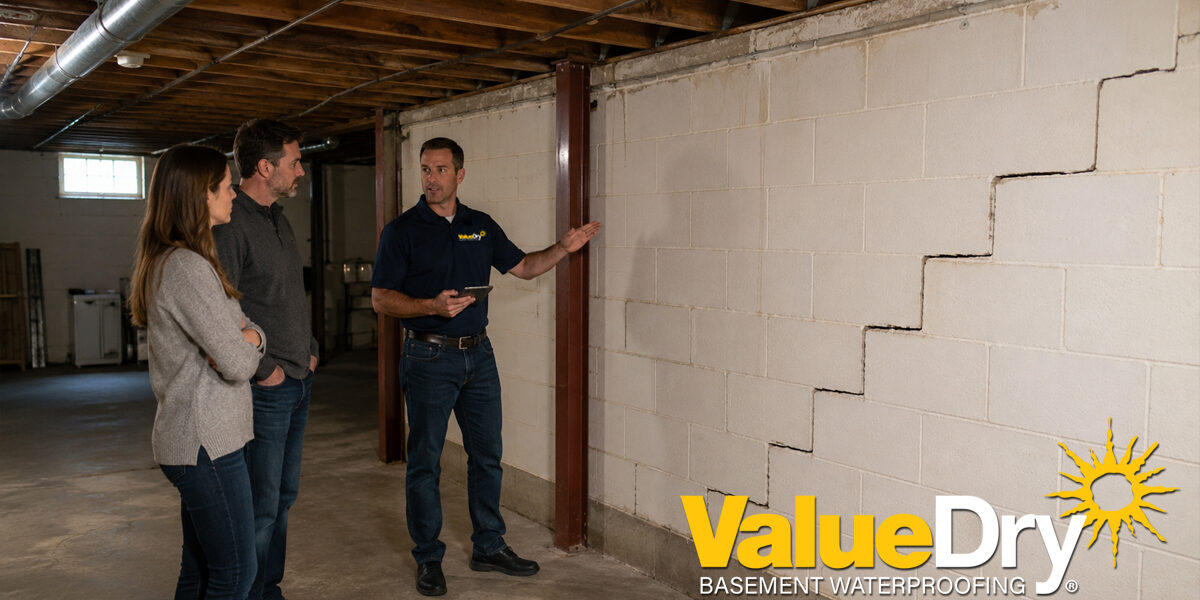
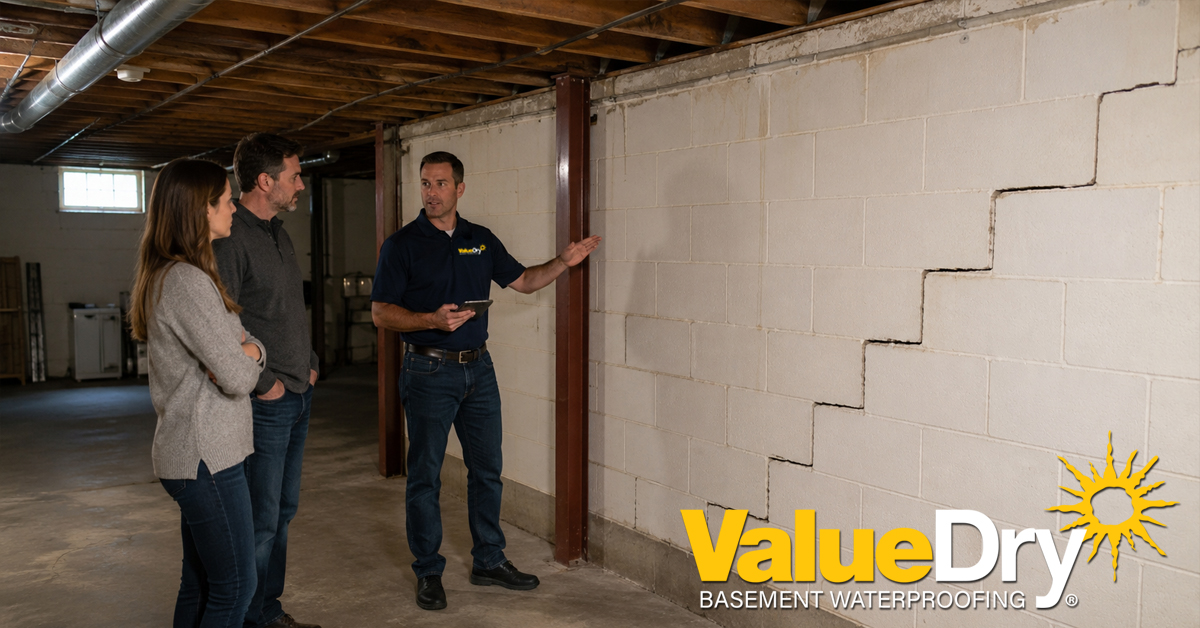
Stair-Step Cracks in Brick or Block
Stair-step cracks follow mortar joints in a diagonal, step-like pattern. They are commonly seen in block or brick foundations. These cracks often result from foundation settlement or shifting soil conditions. Expansive clay soils, tree root activity, and uneven moisture levels can all contribute to movement.
While small cracks may be cosmetic, widening or spreading stair-step patterns should always be evaluated by a foundation specialist.
-
Vertical Foundation Cracks
Vertical cracks are common in poured concrete foundations and may form during curing or from minor settlement. However, they can also become pathways for water intrusion. During heavy rain, hydrostatic pressure may force moisture through these openings.
Signs such as dampness, staining, or white mineral deposits (efflorescence) suggest water movement and should not be ignored. A professional inspection can determine whether sealing, structural repair, or waterproofing is needed.
-
Cracks in Basement Floors
Foundation issues are not limited to walls—basement floors can also crack and leak. When groundwater pressure builds beneath a slab, moisture seeks the easiest escape route, often through floor cracks or joints.
Water may also enter where the floor meets the wall, known as the cove joint. Persistent seepage in this area often indicates a broader drainage issue beneath the home.
-
Doors and Windows That Stick or Misalign
Doors and windows throughout the home should operate smoothly. If multiple units suddenly begin sticking or rubbing, it may indicate structural movement. Foundation settlement can shift framing and distort openings. This can cause doors to drag, latches to fail, or windows to become difficult to open.
While humidity can cause minor seasonal changes, a professional should evaluate widespread or worsening issues.
-
Uneven or Sagging Floors
Sloping or uneven floors are often early indicators of foundation or structural concerns. In crawl space homes, weakened joists, beams, or support posts may contribute to sagging. Moisture exposure can accelerate wood deterioration and reduce structural strength.
In some cases, the issue originates in the foundation itself, where settlement causes uneven support beneath the structure.
A full inspection helps determine the true source of the problem.
-
Gaps Around Windows, Doors, or Interior Finishes
New or expanding gaps around windows, doors upstairs can signal structural movement. Upstairs, you may notice separation between walls and ceilings, crown molding pulling away, or cabinets no longer sitting flush against walls.
While a single small gap may not be serious, multiple developing gaps often indicate ongoing foundation movement.
-
Water Seepage and Efflorescence
Water intrusion and foundation issues frequently go hand in hand. Damp basement walls often indicate pressure building outside the foundation. Efflorescence appears as a white or gray powder on concrete or masonry surfaces. It forms when water carries minerals through the material and evaporates, leaving residue behind.
Musty odors, damp spots, or recurring moisture are also important warning signs. Even without visible standing water, these conditions suggest excess moisture entering the basement.
-
Cracks That Continue to Grow
One of the most important things to monitor is change over time. A stable, hairline crack may not be urgent. However, cracks that widen, lengthen, or shift direction indicate ongoing movement.
Documenting cracks with photos and dates can help track progression. If multiple cracks appear or existing ones worsen, a professional evaluation is strongly recommended.
What Causes Foundation Problems?
Foundation issues typically stem from soil and water interactions around the home. Heavy rainfall can saturate soil and increase pressure against foundation walls. Poor grading or clogged drainage systems can direct even more water toward the structure.
Dry conditions can also contribute. When soil shrinks during drought, it may pull away from the foundation, creating voids that later fill rapidly during rain. Tree roots, improper downspout placement, and freeze–thaw cycles can further destabilize soil and increase movement over time.
Foundation Repair vs. Basement Waterproofing
Although often related, foundation repair and basement waterproofing address different problems. Foundation repair focuses on structural stability—fixing bowing walls, settlement, cracks, and weakened supports.
Basement waterproofing focuses on controlling water intrusion through drainage systems, sump pumps, and moisture management solutions. Many homes require both. Reducing water pressure can help protect repaired structural components and prevent future damage.
Proper diagnosis is essential—waterproofing alone will not correct structural movement, and structural repair alone will not stop ongoing water intrusion.
What Goes Into a Basement Waterproofing System?
A complete waterproofing system typically includes interior perimeter drainage installed along the basement floor. This system collects groundwater entering near the foundation walls and directs it to a sump basin. A sump pump then removes the water from the home.
Discharge lines carry water safely away from the foundation. Depending on conditions, additional solutions may include crack sealing, vapor barriers, or window well drainage systems. Costs vary based on basement size, water severity, and system design. Minor repairs may be relatively simple, while full perimeter systems can require a larger investment.
A professional inspection is the only reliable way to determine what your home needs. Value Dry always provides free inspections before recommending solutions.
Protecting Your System After Installation
Once a waterproofing system is installed, ongoing maintenance is essential. Inspect sump pumps, drainage systems, alarms, and backup batteries regularly to ensure proper operation.
Annual maintenance helps identify small issues before they become major failures during storms. A failed pump during heavy rain can quickly undo years of protection.
Maintenance records also provide value during resale, showing that the system has been properly cared for.
When Should You Be Concerned?
Not every crack or imperfection is a cause for alarm. However, certain combinations of symptoms should never be ignored. Horizontal cracks with wall bowing, growing stair-step cracks, or water intrusion combined with structural movement are all strong indicators that professional evaluation is needed.
The most important step is not guessing. A trained foundation specialist can determine whether the issue is cosmetic or structural.
Foundation Repair FAQ
Do all foundation cracks require repair?
No. Some cracks are cosmetic or caused by normal settling. However, growing, leaking, or structural cracks should be inspected.
Are horizontal cracks dangerous?
They can be. Horizontal cracks often indicate significant external pressure against foundation walls.
Can water damage a foundation?
Yes. Excess moisture increases soil pressure and can contribute to cracking, shifting, and long-term structural issues.
Can basement floors leak?
Yes. Water can enter through floor cracks or along the cove joint where the floor meets the wall.
What is hydrostatic pressure?
It is the force of groundwater that exerts against your foundation as surrounding soil becomes saturated.
Is foundation repair the same as waterproofing?
No. Repair addresses structural issues, while waterproofing manages water intrusion. Some homes need both.
Should I fix foundation issues before finishing my basement?
Yes. Always resolve structural and moisture problems before finishing interior spaces.
How much does foundation repair cost?
Costs vary based on severity and repair type. A free inspection provides the most accurate estimate.
Does Value Dry offer free inspections?
Yes. Value Dry provides free foundation inspections to help homeowners understand their options.
Protect Your Home Before Damage Spreads
Recognizing the Signs You Need Foundation Repair early can help protect your home’s safety, value, and long-term stability.
Value Dry Basement Waterproofing brings over 20 years of experience serving Maryland and Arlington, Virginia. We offer competitive pricing, patented repair systems, financing options, and lifetime transferable warranties.
Our licensed and insured team also provides basement waterproofing, sump pump installation, crawl space encapsulation, egress windows, and indoor air quality solutions. Annual maintenance plans help keep systems performing at their best year after year.
Schedule your free inspection today and get a clear, professional understanding of what your foundation is telling you.