
Can a Dehumidifier Fix a Wet Basement?
- November 23, 2026
- No Comments
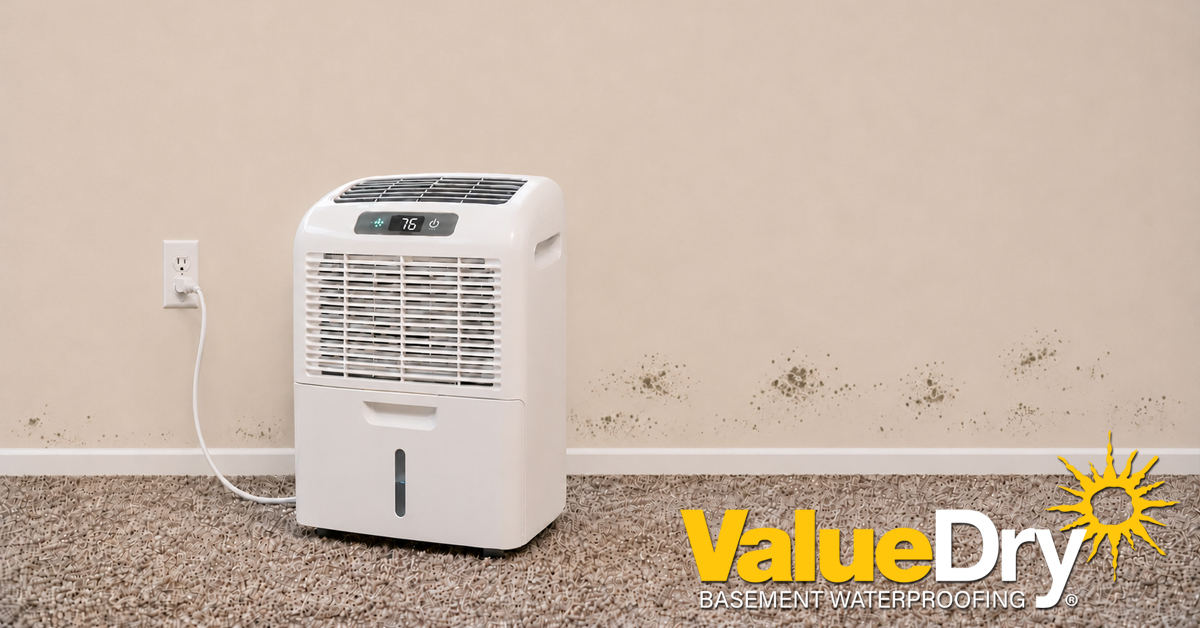
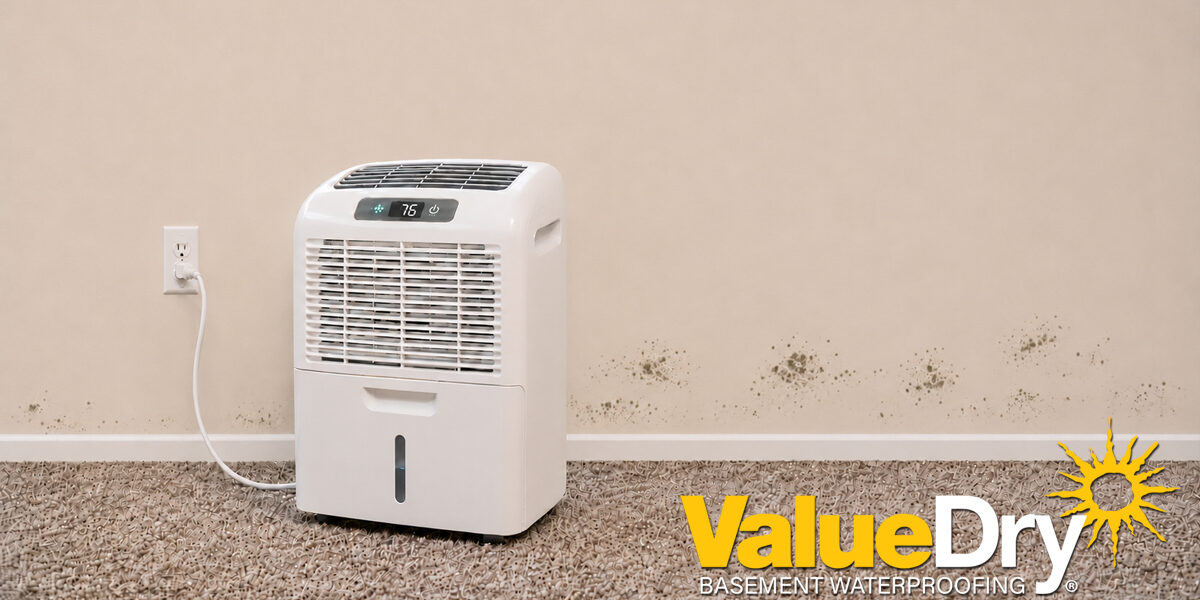
No, a dehumidifier alone cannot fix a wet basement. It removes water vapor from the air and can reduce condensation on cold surfaces. Seepage through the foundation or plumbing leaks needs repairs at the source. If you empty the dehumidifier every day and still find a puddle, look at where the water first appears. That clue can help you decide whether you need humidity control, a plumber, or a basement waterproofing inspection.
Ideal Indoor Humidity Levels
The EPA recommends indoor relative humidity below 60%, ideally between 30% and 50%. Relative humidity measures how much moisture the air holds compared with how much it can hold at that temperature. That’s why air that feels comfortable upstairs can leave droplets when it touches a cold basement pipe.
Use an inexpensive humidity meter to see what’s happening downstairs. Set it away from an open window, a supply vent, or the air coming out of your dehumidifier. Then check it at different times over several days. Readings taken after a storm or on a humid afternoon can help you spot a pattern. A reading above 60% most days is a reason to investigate what keeps adding moisture.
Say your meter reads 45%, yet the carpet beside one wall feels damp after every storm. That reading tells you about the air around the meter at that moment. The damp carpet gives you a reason to investigate water entry along that wall.
How to Tell Humidity From Water Seepage
Start with the location of the moisture. Small beads along the length of a cold pipe often form when warm, humid air touches it. Condensation can also drip from a pipe and leave a small puddle directly beneath it. You may notice a musty smell or condensation on several cool surfaces at once. Meanwhile, a drip concentrated at a pipe fitting or under a washer hose can point to a plumbing leak.
Seepage often leaves a more localized pattern. After rain, you might see a wet strip where the wall meets the floor or a puddle below a crack. Another clue is a chalky white deposit on a concrete or block wall. This residue, called efflorescence, forms when moisture moves through masonry and leaves dissolved minerals behind as it dries. Old deposits can remain after the wall dries, so check for fresh dampness nearby.
You can have both problems in the same wet basement. Water that seeps under the carpet can evaporate and raise the humidity throughout the room. In finished spaces, look for swelling baseboards, stains that return after rain, or a damp carpet edge. Take photos before those spots dry and note whether they follow rain or appliance use. If the evidence points to a pipe or fixture, ask a plumber to trace the leak.
When a Dehumidifier Makes Sense
A dehumidifier makes sense when your basement air stays humid, and moisture collects on cool surfaces. As the unit removes water vapor, you may notice less condensation on pipes and windows. Check the humidity meter again to see whether conditions improve. If the bucket fills quickly, look for recurring damp spots before lowering the humidity setting.
For everyday use, pick a drainage setup you can maintain. A full collection bucket can stop the unit until you empty it. If your model allows continuous drainage, route the hose according to the manufacturer’s instructions.
Dehumidification can also help after a leak. Once you repair the source and remove standing water, run the dehumidifier when the area is safe. Give damp surfaces time to dry, and check materials like carpet and baseboards for lingering moisture. If water reached outlets or equipment, have an electrician confirm it’s safe to use power in the area.
After you address water entry, consider whether your basement also needs ventilation. A ventilation system exchanges air, while a dehumidifier removes water vapor. Our Indoor Air Quality team can help you decide which approach fits your space.
What Fixes a Wet Basement for the Long Term
First, see where roof runoff goes during or just after rain. Leaves can block a gutter and send water over the edge beside the house. A downspout that empties near the foundation can soak the ground in the same spot during every storm. Check whether the soil slopes toward the wall or whether water collects in a basement window well. Clearing a drain or directing runoff farther from the foundation may resolve some leaks.
Recurring water at the floor joint or through the slab deserves a closer look. Groundwater can build up around and beneath the foundation, especially after prolonged rain. An inspector can look for likely entry points and evaluate any drainage system you already have. If your wet basement already has a sump pump, tell us when it runs and where the discharge pipe ends.
Depending on what we find, perimeter drainage can collect groundwater and channel it into a sump basin. The sump pump then moves the water outside to a discharge point away from the foundation. For a leak at one identifiable crack, a targeted repair may make sense after we evaluate the wall. Each recommendation depends on how the water reaches your basement and what it takes to manage that flow.
Schedule a Free Value Dry Inspection
Recurring damp spots or puddles deserve an inspection, especially before you replace flooring or drywall. Show us where you see moisture and tell us when it returns. We’ll find the source, assess any existing drainage, and explain your options. Ask what the proposed repair will cover so you can compare options before deciding.
Our Basement Waterproofing team brings over 20 years of experience to homes in Central Maryland and Arlington, Virginia. Value Dry is fully licensed and insured. We offer competitive pricing, financing options, and patented waterproofing products. Qualifying systems come with lifetime transferable warranties. Our crews complete most installations in one day, so you can get back to your routine sooner.
We also install sump pumps and can recommend crawl space encapsulation or foundation repairs based on what we find. Schedule your free Value Dry inspection to find out what’s keeping your basement wet and which solution fits the problem.