
What is Hydrostatic Pressure?
- March 24, 2026
- No Comments
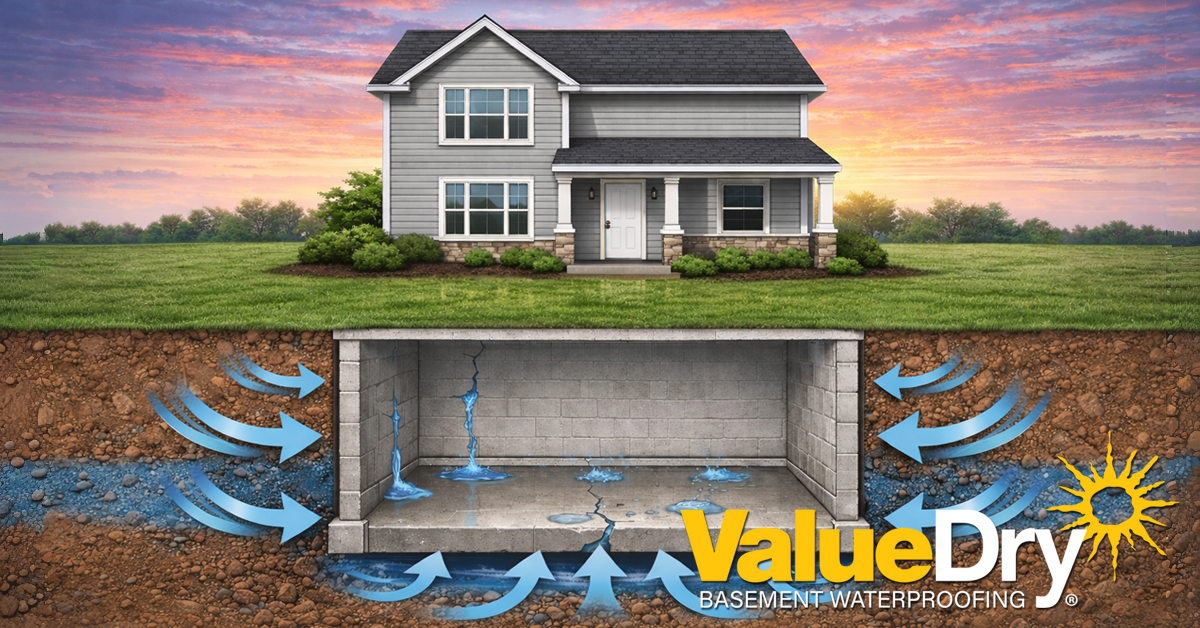
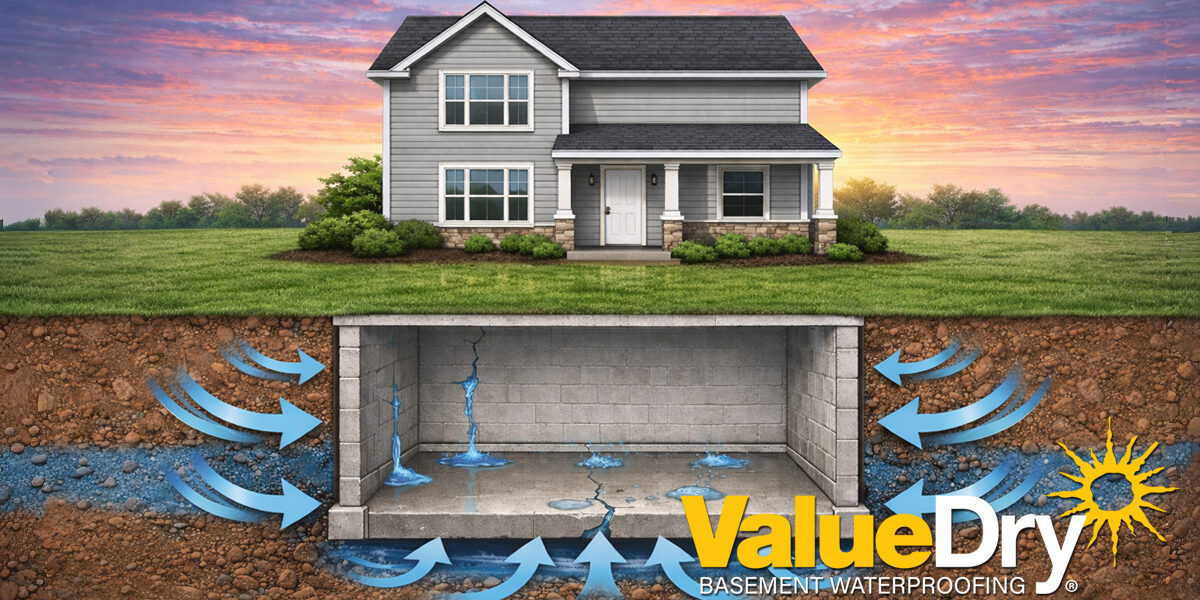
If your basement leaks after a storm, hydrostatic pressure may be the reason. Many homeowners hear the term and shrug. Let’s make it simple and useful. Hydrostatic pressure is the pressure exerted by water at rest. In a home, it is the force that water exerts against your foundation. Water in the soil presses inward on walls and pushes upward on slabs. That force keeps working until you redirect the water.
Why Hydrostatic Pressure Builds Around Homes
Rain and snowmelt soak into the ground, raising moisture levels. When soil cannot drain fast enough, water collects, and pressure rises. Clay-heavy soils in Maryland and Northern Virginia often make this worse.
Poor drainage adds even more load around the foundation. Clogged gutters cause water to run right next to the home. Short downspouts leave runoff at the base of the wall.
High groundwater can contribute, even during dry spells. One heavy storm can raise the local water table for days. That delayed surge often surprises homeowners.
How Hydrostatic Pressure Affects Your Foundation
Water pressure looks for weak points first. Small shrinkage cracks become entry paths. Mortar joints in block walls can also seep. Greater water depth creates higher pressure against the wall.
Sometimes the first symptom is dampness, not a dramatic flood. Moisture may appear along the wall-to-floor seam, also called the cove joint. Efflorescence can form as minerals dry on concrete or block surfaces.
Over time, constant pressure can strain the structure. Basement walls may bow inward. Floor slabs can crack when water pushes from below. Finished basements can suffer quickly because drywall and flooring trap moisture.
Hydrostatic pressure can also affect indoor air quality. Damp basements feed musty odors. Mold growth becomes more likely when humidity stays high.
How To Detect Hydrostatic Pressure in Your Basement
Start by noticing when the problem shows up. Leaks after rain often point to saturated soil around the home. Seepage during thaw cycles can also signal rising groundwater pressure.
Watch for these common signs:
- Water at the cove joint where the wall meets the floor
- Damp streaks or stains on lower walls
- White, chalky efflorescence on concrete or block
- Peeling paint or bubbling wall coatings
- Musty odors and rising humidity
- New cracks that widen over time
- A sump pump that runs often or runs for long cycles
Check outside, too. Overflowing gutters near a corner can feed pressure to that wall. Downspouts that end beside the foundation can do the same.
What To Do About Hydrostatic Pressure
You can lower pressure by managing water before it reaches the foundation. First, clean gutters and confirm every downspout discharges far from the home. Next, improve grading to ensure the soil slopes away from the wall. Then keep mulch and soil below siding and masonry weep holes.
Buried downspouts can help, but make sure they’re installed correctly. Use a smooth, solid pipe and maintain proper slope. Discharge the pipe well away from the foundation.
Sometimes exterior improvements are not enough. In that case, you need a system that handles water under the slab. An interior perimeter drainage system collects seepage and routes it to a sump basin. A reliable sump pump then sends water safely outside.
Crack repair can support the bigger system. Sealing cracks reduces direct entry points. Structural movement may also require foundation repair.
Moisture control finishes the job. Dehumidification helps keep the basement air dry and discourages mold. Crawl space encapsulation can also reduce the amount of humidity entering the home.
FAQS About Hydrostatic Pressure
What Causes Hydrostatic Pressure in a Basement?
Water builds up in saturated soil and pushes against the foundation. Poor drainage and clay soils can raise that pressure.
How Do I Know If My Leak Is Hydrostatic Pressure?
Leaks that appear after rain or a thaw often indicate groundwater pressure. Stains at the wall-to-floor seam are another clue.
Can Hydrostatic Pressure Crack My Basement Floor?
Yes, pressure can push upward and stress a slab. Cracks often appear at joints or in thinner areas.
Is Efflorescence A Sign of Hydrostatic Pressure?
Often, yes, because water carries minerals through masonry. Those minerals dry as a white powder on the surface.
Why Does My Basement Leak Even When It Has Not Rained?
Groundwater can stay high after earlier storms. Frozen ground can also force meltwater toward the foundation.
Should I Seal My Basement Walls with Waterproof Paint?
Paint can hide symptoms, but it rarely stops pressure. Proper drainage and pumping address the cause.
Does A Sump Pump Solve Hydrostatic Pressure by Itself?
A pump helps, but it works best with interior drainage. Drainage reliably directs water to the pit.
Will Landscaping Changes Help Reduce Hydrostatic Pressure?
Yes, better grading and downspout routing reduce soil saturation. Thoughtful flower bed drainage also prevents water buildup.
When Should I Call a Professional?
Call when you see recurring seepage, wall movement, or rising humidity. A proactive inspection can prevent bigger repairs.
Where Value Dry Can Help
Value Dry Basement Waterproofing provides affordable, reliable solutions throughout Maryland and Northern Virginia. Our inspectors and technicians bring over 20 years of experience. We offer competitive pricing, patented basement waterproofing products, and lifetime transferable warranties. Most installations are completed in one day, which limits disruption. Financing options are available for qualified homeowners. Value Dry is fully licensed and insured. Homeowners trust our reputation and responsive service.
Many homeowners explore our Basement Waterproofing services first. Others need Sump Pump Installation or a battery backup upgrade. Some homes benefit from Foundation Repair when walls show movement. You can also learn about Crawl Space Encapsulation and Indoor Air Quality solutions for humidity control.
Annual upkeep matters once a system is in place. Our Annual Maintenance Plan helps keep pumps, drains, and discharge lines working.
What To Expect During a Professional Assessment
A good inspection starts with questions about timing and patterns. Technicians inspect the wall-to-floor joint for staining. They also evaluate grading, gutters, and discharge locations.
Measurements help confirm the cause. Inspectors note crack type, size, and direction. They look for wall movement and floor heaving. Then they recommend the right fix, not the biggest fix.
Hydrostatic pressure is common but manageable. The key is controlling where water goes. Once you redirect and remove the water, the pressure drops, and the basements stay dry.